A lawn overseeding service in Eastlake, OH is worth booking when the turf has thinned enough that bare soil shows through under the canopy, and worth skipping when it has not. Seed is not a seasonal ritual. It is a response to a specific condition in the stand of grass.
Phil and Brad started Lawn Control Center more than 20 years ago, and both are still involved in the business every day. That keeps the seeding calls in the hands of people who have walked plenty of thin lawns in November, and the question we hear most is how a homeowner tells the difference from the back step.
A few reliable signals answer it, and they are easier to read now, at the end of the growing season, than they will be in April.
Related: Our Story: Reliable Lawn Care and Lawn Fertilization in Avon, OH, Built on Honesty and Real Results
How Do You Tell a Lawn Needs Overseeding?
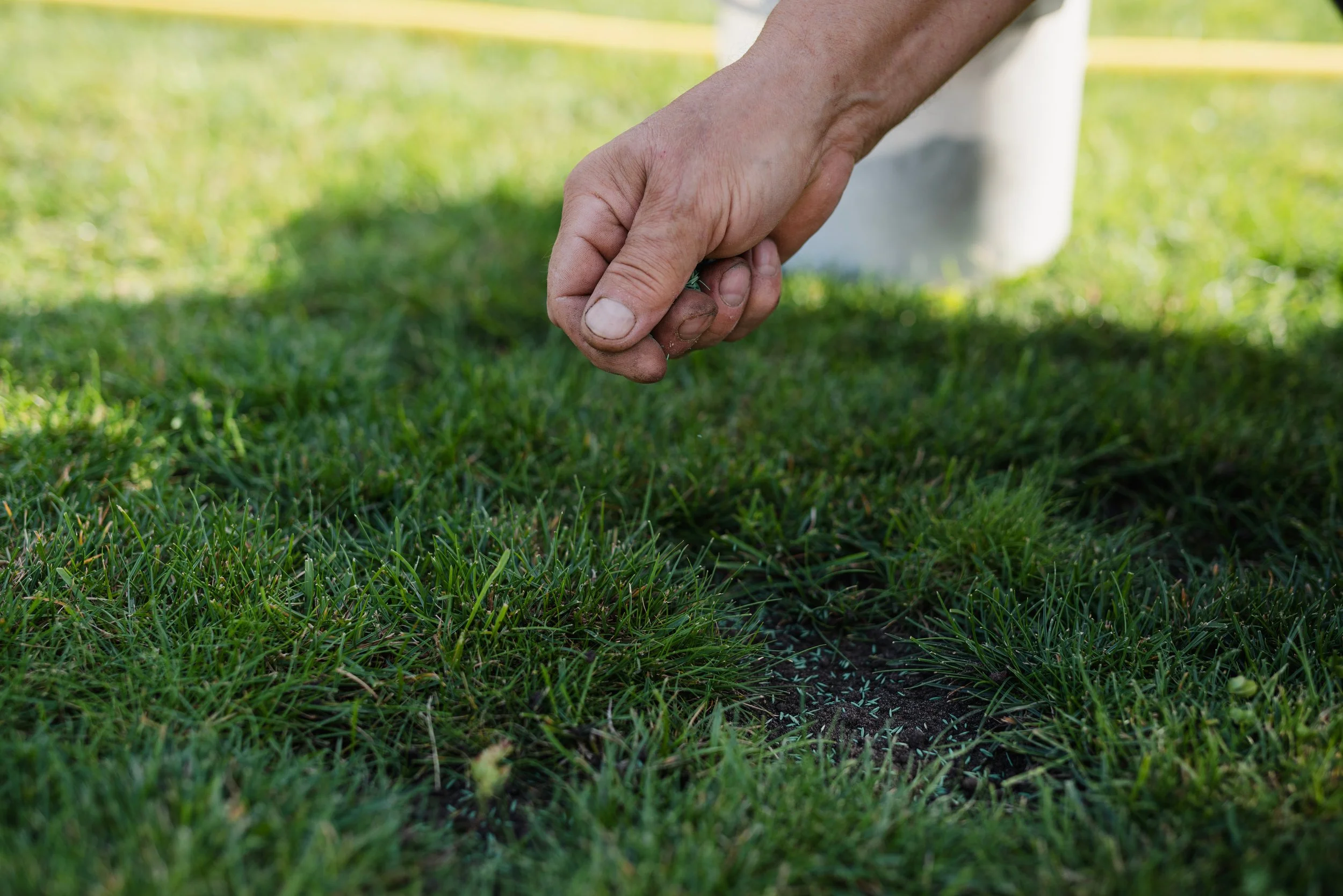
Part the canopy with your fingers in three or four spots across the yard. If soil shows between the plants rather than a dense mat of crowns, the stand has thinned and seed has somewhere to land.
A lawn that looks pale but stays dense usually has a nutrition or disease issue rather than a density issue, and seeding it will not fix the color. That case calls for a fertilization program adjustment instead, and telling the two apart is the distinction that saves the most wasted effort.
Check the edges as well as the middle. Thinning tends to start along driveways, under trees, and in the paths people and pets travel, so those spots show the trend before the open lawn does.
Why Is Overseeding Paired With Aeration?
Seed germinates where it contacts soil, and a mature lawn in Northeast Ohio carries a layer of thatch and compaction that keeps seed suspended above the soil entirely. Core aeration pulls small plugs of soil and opens channels that the seed drops into, which is the whole mechanism.
Our aeration and overseeding work is scheduled together for that reason. Broadcasting seed over an unaerated lawn mostly feeds the birds.
The plugs left on the surface break down over the following weeks and return their nutrients to the soil. One aeration a year is enough for most lawns, so the pairing fits a single fall visit rather than a series of appointments.
What Grass Types Suit a Northeast Ohio Lawn?
Cool-season blends carry lawns in this part of Ohio, and we seed a mix of Kentucky bluegrass, ryegrass, and fescue rather than a single species. Each one covers a weakness in the others.
Ryegrass sprouts quickly, stands up to foot traffic, and holds the surface while the bluegrass fills thin spots and builds the base over the following seasons. Fescue roots deeply and carries the shadier stretches along a fence line or under a maple where the other two struggle.
That mix also gives the lawn more than one way through a dry stretch. Fescue’s drought resistance keeps color in the parts of the yard that dry out first, while the bluegrass recovers once rain returns.
When Does the Seeding Window Close in Eastlake, OH?
The seeding window in Eastlake closes when soil temperature drops below what seed needs to germinate, which typically falls in the first half of November. The productive stretch opens in early September, when soil is still warm and fall rain is more reliable.
Seed put down at the very end of that window sits dormant and comes up in early spring instead. That dormant seeding is a legitimate approach on a lawn that has already lost its density. It is a slower result, not a failed one.
For a lawn that missed this fall entirely, the better plan is usually to note the thin areas now and schedule aeration and overseeding for next September. Spring seeding competes with weeds and with turf still coming out of dormancy, so fall remains the stronger window.
What Should the Lawn Look Like the Following Spring?
Expect the thin areas to fill rather than the whole lawn to transform. New seedlings come up finer and slightly lighter than the established turf, and the two knit together over the first mowing cycles.
A badly thinned lawn frequently needs a second pass the following fall before the density holds on its own. One season of seed into compacted ground rarely rebuilds a stand that took several years to decline.
Track the same spots you checked by hand in the fall. If soil still shows through there by late spring, those areas go first on the list for the next seeding window.
Lawn Overseeding Service in Eastlake That Starts With a Look at the Turf
The lawn shows what it needs to anyone who gets down and looks, and mid-November is a good time to do that while this season’s damage is still visible. If soil shows through, note where, and plan the work around those areas rather than the whole yard.
Lawn Control Center provides lawn overseeding service and aeration across the Greater Cleveland area from our Eastlake office. We look at the lawn first and say plainly if seed is the right call.
Get your instant overseeding quote from Lawn Control Center.
In Summary
How soon can a newly overseeded lawn be mowed?
New grass should reach 3 to 4 inches before the first mowing. Mowing earlier risks pulling young seedlings out before their roots take hold.
How long does overseeded grass take to germinate in Eastlake, OH?
Most seed from a Lawn Control Center fall overseeding in Eastlake, OH begins germinating within 7 to 14 days, depending on the weather. Full results take several weeks as the new grass thickens into the existing lawn.
How much water does a lawn need after overseeding?
Light, consistent watering for the first 2 to 3 weeks keeps seed moist enough to germinate and root. Rain in the forecast covers part of that watering schedule.
Does overseeding reduce weeds in a lawn?
Overseeding reduces weeds over time rather than treating weeds already present. A dense stand of turf leaves weed seed less open ground to establish in, which makes seeding a long-term part of weed control.