
How to Tell Armyworm Damage Apart From Other Lawn Problems in Columbus, OH
A lawn that suddenly develops brown, chewed-looking patches sends most homeowners searching for a fix immediately, but treating the wrong problem wastes both time and money. Armyworm damage has specific, identifiable characteristics that separate it from drought stress, grub damage, or fungal disease, and getting the diagnosis right is the first step toward effective armyworm control, ensuring the right treatment is applied quickly to stop the damage before it spreads.
Related: How Grub Control Prevents the Damage That Starts Underground and Destroys the Lawn From Below
What Armyworm Damage Actually Looks Like
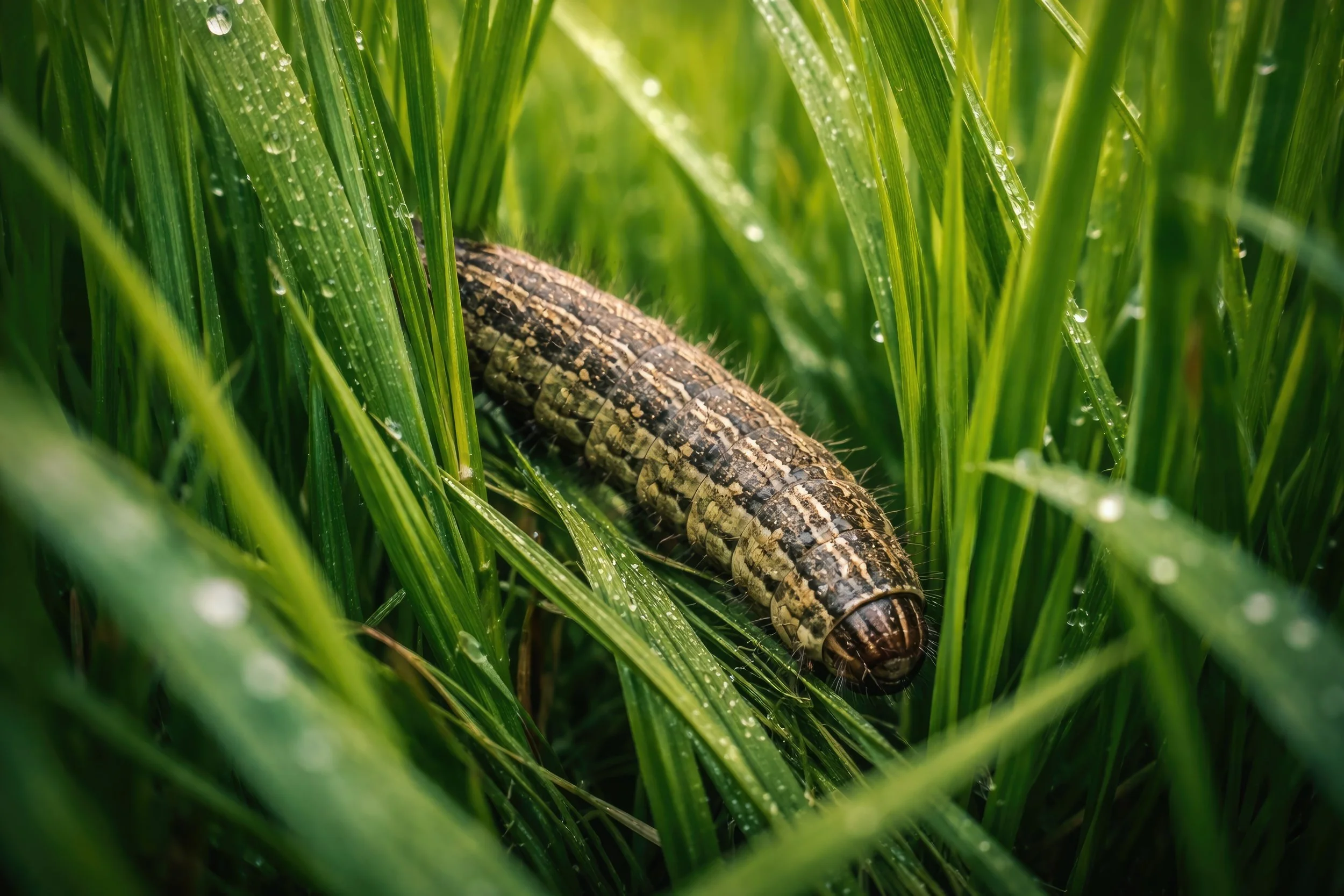
Armyworms feed on grass blades themselves, leaving behind a distinctive chewed or ragged appearance rather than the uniform browning caused by drought stress. Damage often appears and spreads rapidly, sometimes within just a day or two, as the larvae move across a lawn in a group.
Close inspection of the blades themselves usually shows notched or skeletonized edges rather than the dry, brittle texture typical of heat stress. The damage also tends to move in a noticeable direction across the yard as the group of larvae feeds its way from one section to the next.
Why The Speed Of Damage Is A Key Identifying Clue
Drought stress and fungal disease both develop gradually over days or weeks. Armyworm damage, by contrast, turns a healthy-looking section of lawn brown in a remarkably short window, a speed that itself points toward an active insect infestation rather than an environmental stress factor.
A homeowner who watered and cared for a lawn normally right up until damage appeared can usually rule out drought as the cause based on that timeline alone. This rapid onset is one of the clearest signals to watch for, since few other common lawn issues move this fast.
How Armyworm Damage Differs From Grub Damage
Grubs feed on grass roots below the surface, which causes turf to pull up easily like loose carpet since the root system has been compromised. Armyworms feed on the blades above ground, so affected turf still has intact roots even as the visible leaf tissue gets stripped away, a distinction that becomes clear with a simple tug test on the affected area.
Because the root system stays intact with armyworm damage, the lawn often has a real chance to recover once the larvae are treated and new blade growth comes in. Confusing the two problems can lead to a treatment aimed at the wrong pest entirely, since grub control products don't address surface-feeding insects.
Checking For The Larvae Themselves Confirms The Diagnosis
Armyworm larvae are most active at night and tend to hide in thatch or the top layer of soil during the day. A thorough inspection, checking under thatch and along the soil surface at the edge of damaged areas, often reveals the larvae directly, which removes any guesswork from the diagnosis.
Larvae are easiest to spot in the early morning or evening hours, when they're more likely to be feeding on the surface rather than hidden below. A flashlight inspection at night, right along the edge between damaged and healthy turf, is one of the most reliable ways to confirm an active population.
Why Timing Matters For Effective Treatment
Ohio typically sees armyworm activity peak in late summer, and treatment applied while larvae are actively feeding works considerably better than treatment applied after the population has already moved on or matured past the vulnerable larval stage. Confirming an active infestation, rather than treating preventively for a pest that isn’t actually present, makes the treatment far more effective.
Getting the Diagnosis Right Protects the Whole Lawn
Armyworm damage has distinct characteristics- the speed of onset, the chewed blade appearance, intact root systems, and visible larvae upon inspection- that separate it from other common Central Ohio lawn problems. Confirming the correct diagnosis before treatment ensures the actual problem gets addressed rather than money spent on a treatment aimed at the wrong issue.
Lawn Control Center brings over two decades of Central Ohio lawn care experience to armyworm identification and treatment across Columbus, Westerville, and Lewis Center, confirming what’s actually happening in a lawn before recommending a fix. That diagnostic step is what keeps a treatment plan focused on the real problem instead of guessing based on brown grass alone.
Contact Lawn Control Center to schedule a Lawn Inspection and get an accurate diagnosis before treating for armyworms or any other lawn issue.
Related: How Pest Control in Cleveland, OH, Helps Reduce Unwanted Activity Around the Home
